My story.
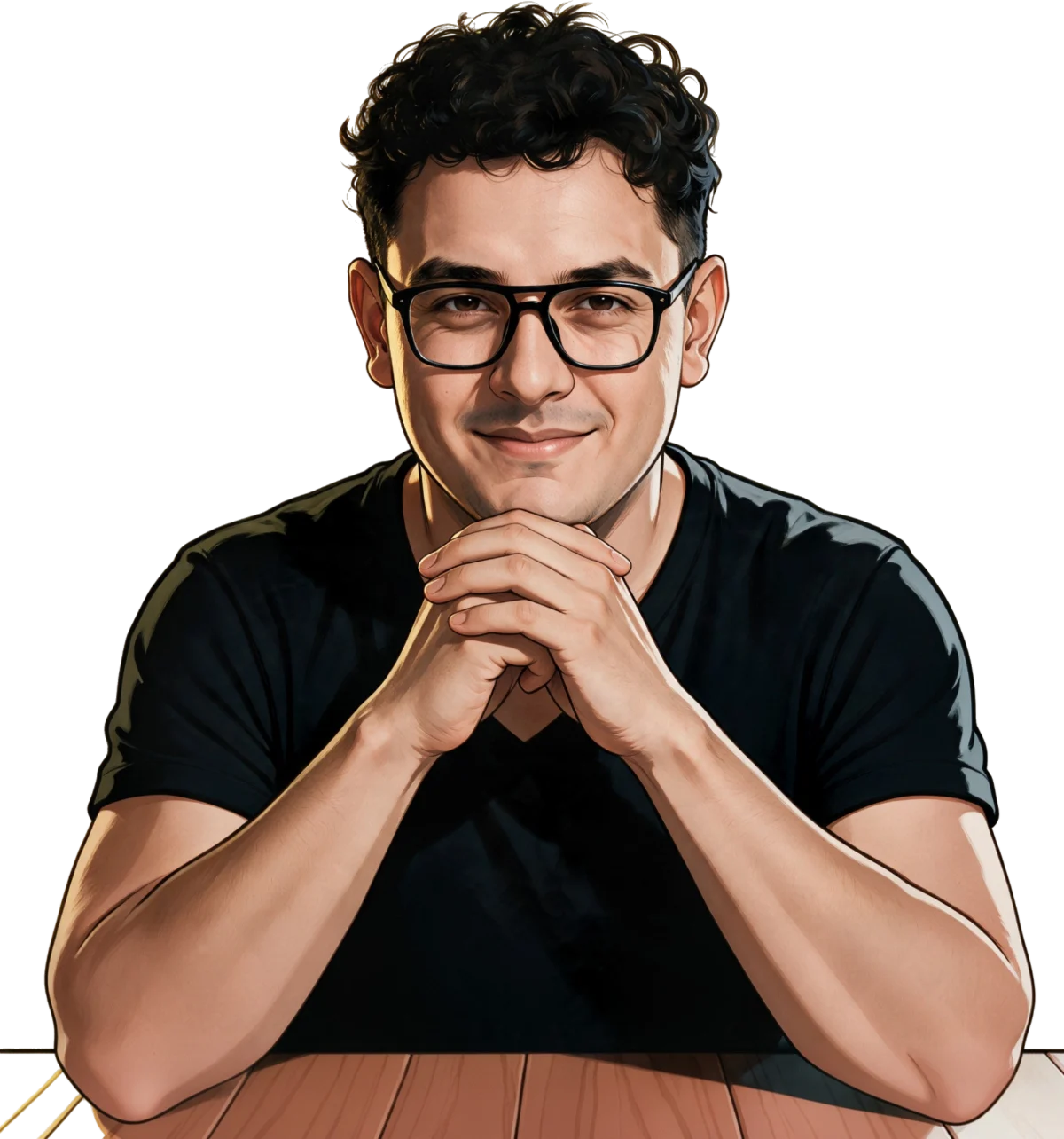
I’m Prasun Bannerjee. I grew up in a Tier 3 city, wrote my first article for an online platform in 2010, and never looked back. I’ve been telling stories and building things ever since, entirely self-taught. Scroll below for the whole story.
Connecting the dots
Steve Jobs said you can only connect the dots looking back. Each of my turns was a jump into something entirely new, made out of curiosity, not to fit a plan. Looking back, the dots connect, and together they give me an edge a straight-line progression never would.
I’ve changed direction more than once, and each new direction multiplied everything I’d learnt before it.
Blogs taught me content and marketing, IT services taught me design and tech, products and brands taught me what people buy, and events taught me to deliver under pressure. Now it’s AI. The range looks wide, but it’s one path, each step built on the previous.
When you’ve been on the battleground for 15+ years, that range compounds: how people feel, how marketing moves them, what it takes to build the thing. Having done each part myself, I can see how the pieces fit, and where they don’t. That’s the intersection I work from.
The journey summarised
-
2010, The first byline: The writer-photographer
Where it started
My first article was for UdaipurBlog, and I’d shot its photos too. That’s how I began there: on its early founding team, behind a camera. Over the next few years I grew into editorial, interviews, press coverage, design, web, social and strategy, learning each one by doing it. All this while I was still in college, pursuing an engineering degree, building skills in real time and learning first-hand.
What this taught me
-
2011, Learning by doing: The freelancer
First clients, before graduation
Still in college, I took on design, website and app work for clients in India and abroad. Every brief was a crash course in something new, and it paid for the next thing I wanted to learn.
What this taught me
-
2011, Trial and error: The experimenter
Blogs of my own
Alongside, I started multiple blogs of my own, in one niche after another: spirituality, tech, management, photography, travel and more, sometimes with friends on board. Some took off for a while, some kept going, some fell flat. Each one made me a better pre-GPT era writer, and taught me how a niche really works: what its readers care about, which stories they share and which they scroll past. They ran alongside the freelancing until I shut them down to make room for Tick Tech Toe.
What this taught me
-
2013, Going global: The project manager
Selling to the world
In 2013 I took a short role as a consultant and project manager at an ecommerce startup shipping to 20+ countries. I ran a small team managing its listings and stores, search and ads, organic and paid, did the creative product shoots myself, and learnt what selling across borders really takes: shipping that holds up, buyers who trust a stranger, and product pages that do the selling on their own.
What this taught me
-
2014, The big stage: The builder
Prarambh, at IIM Udaipur
In 2014 I won the first Prarambh, a 32-hour startup challenge and hackathon at IIM Udaipur. I designed our idea’s brand and built a working prototype against the clock. With that win, my network suddenly went national. I met a lot of great minds along the way, and they changed how I looked at things, technology most of all: not just a service to sell, but a way to build products.
What this taught me
-
2015, Making it official: The studio founder
Tick Tech Toe
In 2015 I gave the freelance work a name and a home: Tick Tech Toe, and it runs alongside everything that follows here. In the early years we said yes to a lot of services and learnt on the go; over time we sharpened what we offer and who we’re for. Today it’s a small team of creative misfits, the round pegs in the square holes (IYKYK), building websites, brands and systems, and making the best use of AI for our clients (AImaxxing, anyone?). Running it taught me what freelancing couldn’t: how to hire, how to price, and how to keep the quality bar where it should be, with clear benchmarks and the processes to meet them.
What this taught me
-
2017, Wedding season: The design partner
Weddings and events
From 2017 until 2025, I was the design partner to wedding and event planners: wedding tools and websites, invitations, stationery, signage, anything a celebration needed designed, including for a few celebrity and royal families. Working that close, I got to see how the events industry really runs, and I ended up advising a few wedding planning companies on their digital marketing too. It’s one of the rare fields where the date never moves, whatever happens, so it taught me to keep my taste under pressure, and to be discreet. Through all of it, I was also advising founders, quietly, as I had since 2016: the thread that leads to today.
What this taught me
-
2020, Homecoming: The consultant
Back to UdaipurBlog, on camera
While the wedding work was still on, I took up a passion project on the side: in 2020 I went back to UdaipurBlog, where my career began, and today one of the largest online media platforms in Rajasthan. As a consultant, I set up its content studio and helped launch UB News, a short daily news bulletin. I’d started there behind the camera; this time I was on the other side of it, hosting solo and interview podcasts.
What this taught me
-
Now, Doubling down: The creative growth advisor
Today
Today I advise founders, in India and abroad: I work out what they actually mean, then help them build it and tell its story well. These days I’m exploring AI to do it faster. I’ve worked with startups and organisations in healthcare AI, SaaS, hospitality, events, manufacturing and communities, from early-stage founders to volunteer-run non-profits.
What this taught me
AI as a multiplier
How PB x AI team up
Most people get a first draft out of it; I help you accelerate the journey to the finished thing.
AI is the latest turn on the same path, and the one that multiplies all the others. It can write, design and code in seconds. I use it every day, and it gets better every month.
Sure, you can use AI on your own. Most people get a first draft out of it; I get the finished thing. I learnt to write, build, sell and deliver long before AI could, so I know what good looks like, what to ask for, and when a confident answer is wrong.
That’s how I get more out of AI and help you benefit from it. AI does the heavy lifting: drafts, prototypes and the repetitive build work. I set the direction, hold every output to the same benchmarks as my team’s work, and make the calls a model can’t.
You get the speed of AI with the judgement of someone who’s built this before, so the work gets done in a fraction of the time, and every hour saved is money saved.
Either way, write to me: